Why agentic AI requires a new definition of strategy and fewer human interfaces
Part 4 in the series on scaling generative AI in enterprise marketing organizations
ICYMI, this is a continuation of my last article where I unpacked why a new operating model focused on the orchestration of humans+agents is critical to unlocking the value from gen AI & agentic AI systems.
Today, most marketing functions have applied gen AI to their existing op model. The analogy?
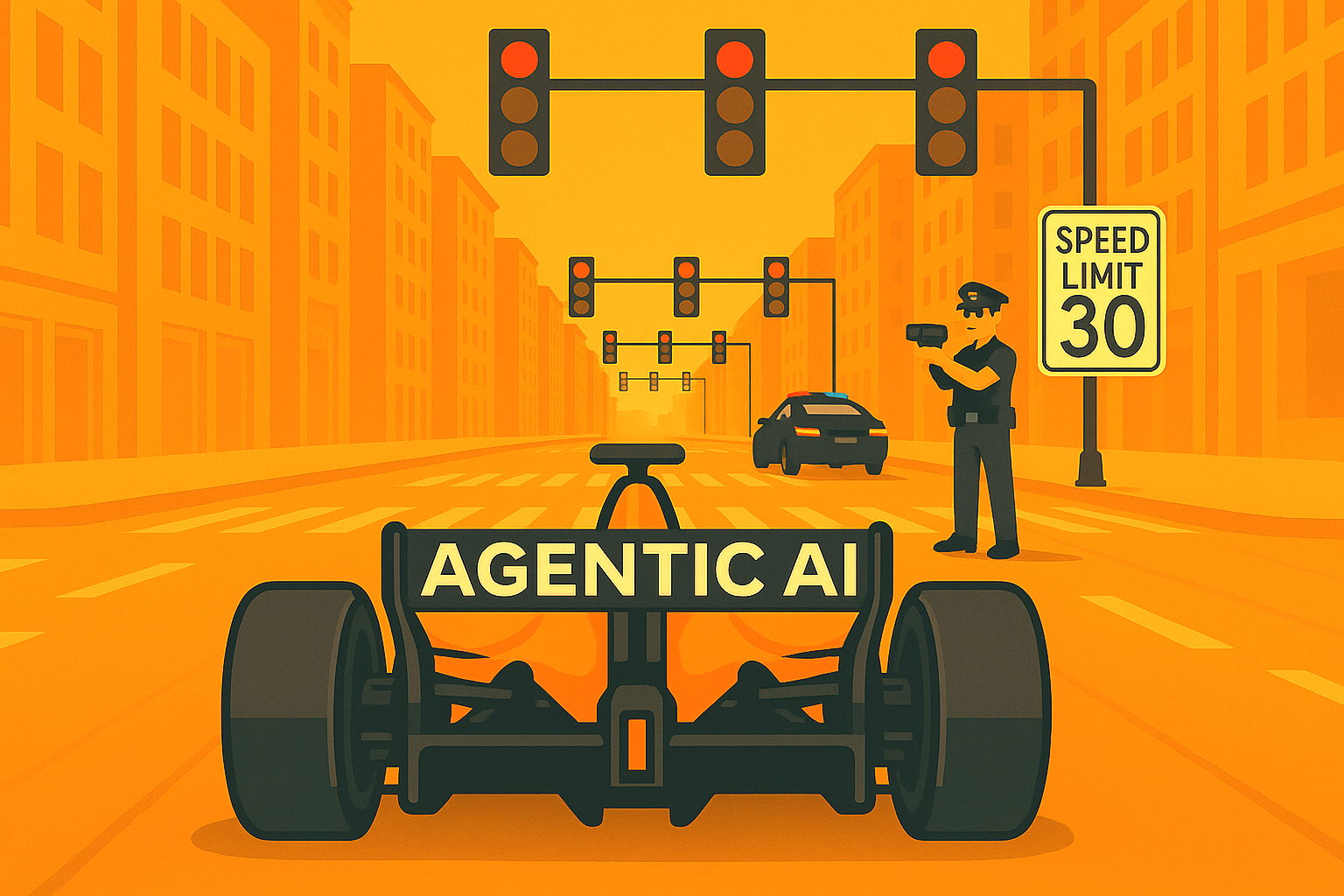
It's like giving every uber driver in Manhattan an F1 car. They’ve got the horsepower to get downtown in 60 seconds. But the traffic lights aren’t green all the way and the cops pull over anyone going faster than 30 mph. The transportation system is the issue. It wasn’t built for speed—it was built for safety, control, and coordination.
To enable this new op model, I identified 3 shifts enterprise CMOs need to make. Shift 1 is about the impact to people and roles - where a reinvented middle layer becomes the new engine of value. Here we will cover shifts 2 & 3.
Shift 2: Move from static strategy to strategic guardrails
Your perfect marketing strategy… just got upended by a single TikTok video.
The speed of business, culture, and customer behavior is outpacing traditional strategy development cycles, especially in large enterprises. While gen AI can dramatically accelerate strategy development from months to days (e.g. data synthesis, competitive analysis, market research, etc.), there are still countless human-dependent activities that drag strategy approval out.
If you’ve worked at a big company, you’ve been through some version of this - the pre-sell 1:1 meetings, the formal cascading through multiple layers of leadership, finance reviews, legal/risk/compliance, etc.
By the time a strategy makes it through the gauntlet, the insight that sparked the need for a new strategy may no longer be true, or if it is, you risk entering the conversation late and appear as a copycat. The latter I’ve personally witnessed in the B2B consulting industry countless times.
Beyond missed business opportunities, the lag also undermines the entire team’s confidence and effectiveness. They either freeze up waiting for leadership approval on every decision, or they move forward without confidence, unsure if their efforts align with what the business actually needs or whether this will impact their end of year review.
The solution isn’t a faster strategy cycle... it’s rethinking strategy as a set of strategic guardrails that can be acted on much faster.
It transforms strategy from a document that sits on a shelf to a living framework that guides thousands of micro-decisions being made across your agentic AI-powered marketing org.
What could these strategic guardrails look like?
While they will differ for each organization, they need to be at an altitude where they are not shifting constantly, specific enough that teams can put them in their annual performance goals and metric-based so that marketing plans can be optimized to a target.
At minimum, I see the need for three categories of strategic guardrails:
Business Outcomes: Think of these as the highest level OKRs that marketing can meaningfully influence which are essential (or direct proxies) for supporting earnings targets (e.g. improve customer retention rate to 88%).
Resource Parameters: Anything that governs resource allocations - budget constraints, investment priorities, specific audience or channel parameters, etc (e.g. 40% of budget should be allocated to C-suite targeted activity)
Brand Boundaries: The non-negotiable elements of how you show up in market (e.g. >90% adherence to writing style guide)
To bring it to life, here’s an investment banking industry example...
Strategic guardrails: “Campaigns should drive 25% growth in qualified leads, 40% of overall budget should focus on engaging C-level audiences, maintain 90+ content quality score”
Marketer’s brief: Q3 campaign goal is to drive consultation requests from CFOs at mid-market companies using ‘Navigate global expansion with confidence’ messaging across trade pubs and events, backed by a piece of macro-economic research data.
Business environment shift: New tariff announcements change corporate buyer’s focus from global expansion to domestic supply chain resilience...
The Marketer’s pivot: With strategic guardrails in place, the same marketer instantly orchestrates a shift. They iterate w/ their strategy agent and decide to switch the campaign focus to promote a different service line entirely with the positioning, “Secure your supply chain financing now.” With that pivot, the network of agents provide a new campaign plan, recommend a digital channel strategy, assembles approved case studies from the DAM, generates initial creative concepts as thought starters for the internal creative team, builds CFO segments most likely to respond from the CDP, plans a programmatic buy, etc.
Note: This example assumes that shift 1 (last article) has been made - that the reinvented middle w/ new decision authority and clear workflow guardrails exist to pull this off at speed.
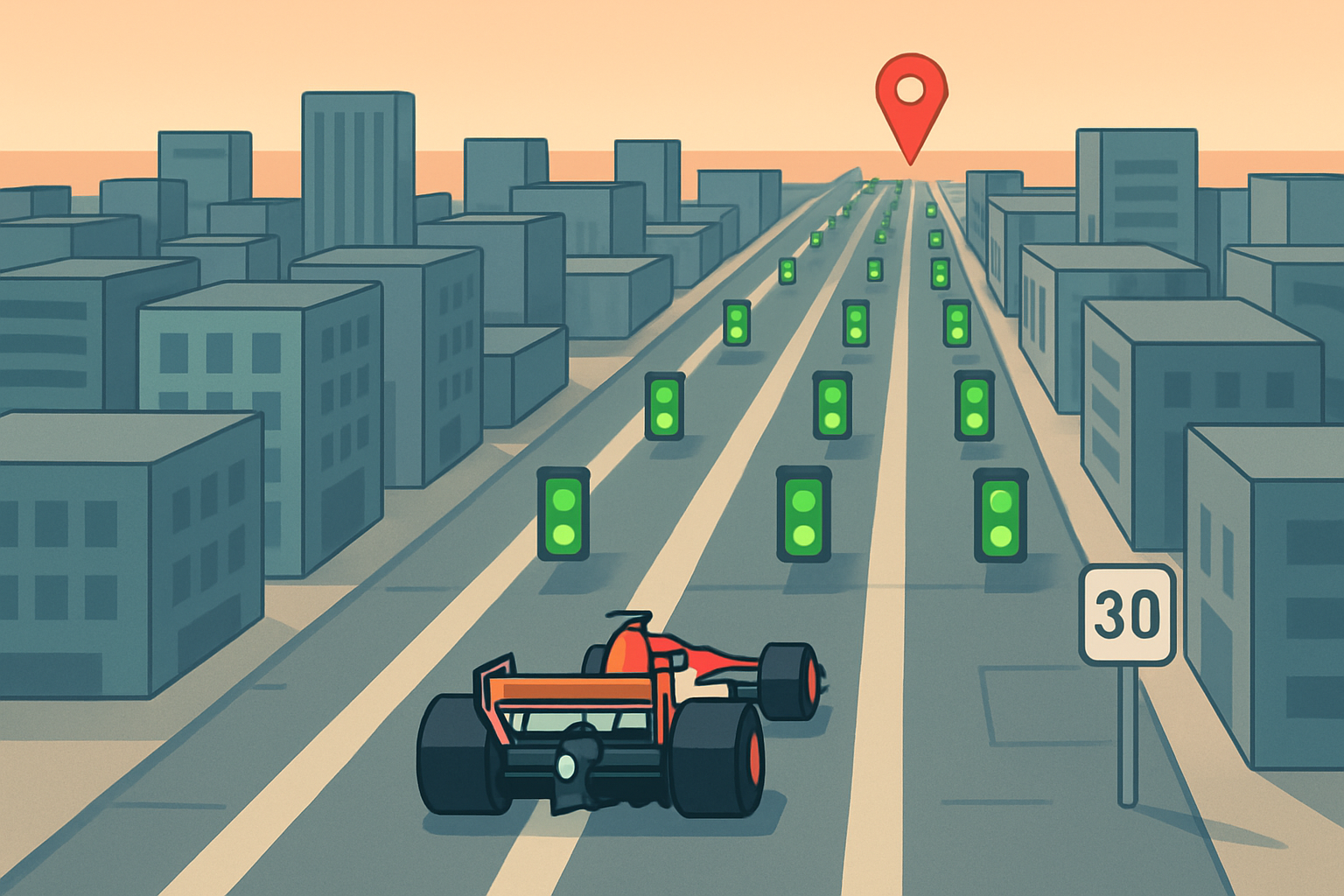
So using our the transportation system analogy - it’s like giving the uber drivers the destination and turning all traffic lights green so they can take the route they think is best.
Shift 3: Streamline martech to orbit around a core marketing OS
Strategic guardrails are only as good as people knowing them - they have to be distributed at scale. Which means turning them into business logic and embedding them across the martech stack so humans and agents can be governed.
While that’s a start, it’s not enough. To really unlock orchestration at scale, martech needs to overcome a much more basic human barrier for the people tasked with orchestrating...massive tool fatigue.
Marketers today have multiple AI and martech tools they need to use every day. While precise figures don’t exist, from what I’ve read (and experienced directly), martech stack sizes in large enterprises can exceed 200 tools and marketers often bounce between 10-20 tools on a daily basis.
The result?
Context switching burns focus: Switching between digital apps can cost up to 9.5 minutes just to re-enter the flow; broader interruption research shows it takes ~23 minutes to resume an interrupted task. Multiply that by dozens of daily toggles and you’ve got a bonfire of attention. Atlassian
Finding information needed is a struggle: Within Microsoft 365 telemetry and surveys, 62% of employees say they struggle with time spent searching for information during the day. In short: signal is drowning in noise. Microsoft
Work-about-work eclipses real work: Roughly 60% of activity is consumed by “work about work”—status pings, chasing docs, and managing shifting priorities. Asana
And with that large a martech stack, the risk of poor quality data, not connected across the stack increases dramatically, creating other problems for agents.
So if the current “integrated” martech stack isn’t delivering the experience or value we need today, and we are changing the operating model entirely - why would we expect the same system to be up to this new challenge?
Orchestration (and Orchestrators) need an easy button.
If lots of tools are the enemy, simplification of the human experience should be the focus. And that means bringing the end-to-end process of work into one core agentic AI-powered marketing operating system (OS).
Strategy, planning, resource management/supervision, workflow and operational reporting, content & creative production, publishing, and performance reporting all are accessed in one place - each with the context of the data from the others and where applicable, across humans and agents.
Specialized tooling will still be needed (hello creative pros), but over time, the point is to reduce the volume of platforms that humans interact with.
This shift doesn’t mean ripping out and replacing every existing tech overnight or even replacing them all. It does mean you need to:
Establish a clear hierarchy where the agentic marketing OS becomes the human point of entry and intelligent command center, with apps, tools and platforms feeding context into it rather than operating as isolated systems.
Monitor agent martech usage alongside human usage. With humans shifting towards the marketing OS as their entry point, agent workforces become “primary users” of martech, and evaluating the agent ability to use those connected platforms to drive desired outcomes will be critical.
Over time, the simpler OS should drive greater levels of productive human activity by eliminating the headache, frustration and cognitive load it takes to just to do their day job. And the agent usage (and performance) analytics will give you insight into whether the rest of the martech orbiting the OS requires updating - or is even needed.
Returning to the analogy, streamlining human interfaces into a core marketing OS is like giving every car a dashboard upgrade to Apple Carplay. You can do everything you wanted to do before (and more)…It just makes the F1 car less complicated to operate, and makes getting to your destination easier and more enjoyable.

An Operating Model built for orchestration
Combined with the shift in people and roles (shift 1), shifts 2 and 3 give your teams strategic and executional clarity that helps remove the speed traps that hold back their ability to orchestrate work.
It’s a lot to think through. And I’m happy to do it with you.
Connect w/ me on Linkedin if you are looking to scale generative AI and agentic systems in your enterprise marketing department (or if you just want to be notified of more thoughts like these).